
In recent years, Nipah virus infection has emerged as one of the most concerning viral diseases due to its high fatality rate and the speed at which it can spread through close contact. During such health emergencies, timely medical support and reliable guidance become more important than ever. At Kaigo Home Health Care, we are committed to helping families access quality healthcare from the comfort of their homes, ensuring professional care when it matters most.
What is Nipah Virus?
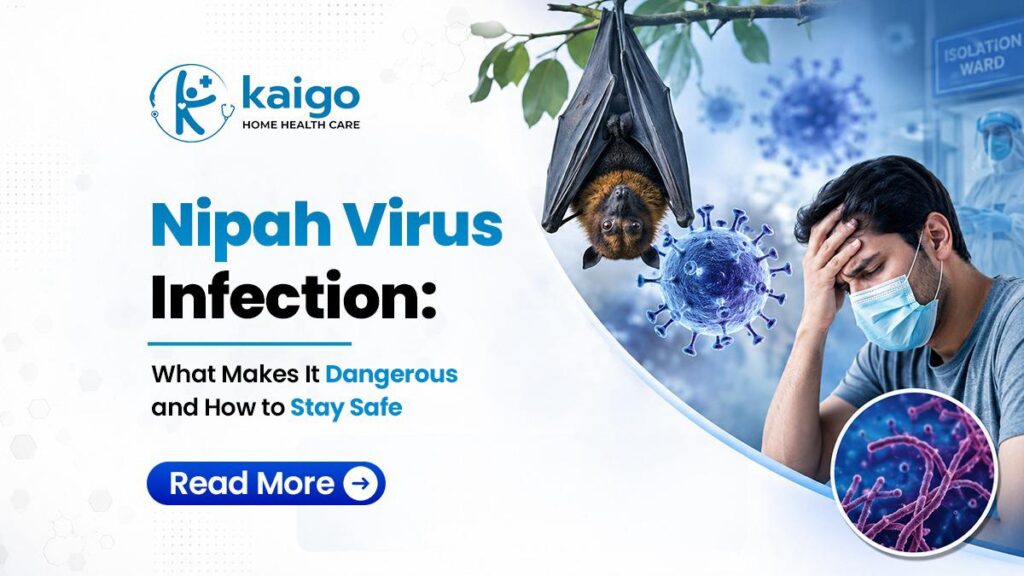
Nipah virus (NiV) is a zoonotic virus, meaning it spreads from animals to humans. The Nipah virus is naturally carried by fruit bats, also known as flying foxes. The infection can also spread through pigs, contaminated food, or direct contact with an infected person.
Although outbreaks are relatively rare, they are often serious because the virus can cause severe respiratory illness and brain inflammation (encephalitis), making early diagnosis and supportive care essential.
Why is the Nipah Virus So Dangerous?
Nipah virus is considered dangerous for several reasons:
High Mortality Rate
One of the biggest concerns is its high fatality rate, which has been reported to range from 40% to 75%, depending on the outbreak and the availability of medical care.
Human-to-Human Transmission
Unlike many other zoonotic diseases, Nipah virus can spread from one person to another through close physical contact, respiratory droplets, saliva, or exposure to the bodily fluids of an infected individual. This increases the risk of outbreaks within families and healthcare settings.
No Specific Cure
Currently, there is no approved antiviral treatment or vaccine for Nipah virus. Medical care mainly focuses on managing symptoms, preventing complications, and providing supportive treatment.
Severe Brain Inflammation
In many patients, the virus affects the central nervous system, leading to encephalitis. Even among survivors, some may experience long-term neurological complications, including memory problems, seizures, or personality changes.
Common Symptoms of Nipah Virus Infection
Symptoms usually appear between 4 and 14 days after exposure and may include:
- Fever
- Severe headache
- Muscle pain
- Sore throat
- Vomiting
- Fatigue
- Cough and breathing difficulty
- Dizziness
- Confusion
- Drowsiness
- Seizures
- Coma in severe cases
Since these symptoms can resemble other viral infections in the early stages, seeking medical attention promptly is extremely important.
How Does Nipah Virus Spread?
The virus can spread through several routes:
- Direct contact with infected fruit bats or pigs.
- Eating fruits that have come into contact with infected fruit bats or their saliva and urine.
- Consuming unprocessed date palm sap that may have been contaminated by fruit bats.
- Close contact with infected patients.
- Exposure to respiratory secretions or bodily fluids.
Healthcare workers and family caregivers should follow strict infection prevention measures while caring for infected individuals.
How to Protect Yourself and Your Family
While there is no vaccine, following preventive measures can significantly reduce the risk of infection.
Avoid Contact with Sick Animals
Do not handle bats, pigs, or animals that appear sick or have died unexpectedly.
Wash Fruits Thoroughly
Always wash fruits properly before eating. Peel fruits whenever possible, especially if there is any chance they were exposed to bats.
Avoid Raw Date Palm Sap
Raw palm sap may become contaminated by fruit bats. Consuming properly processed or boiled products is a safer option.
Practice Good Hand Hygiene
Wash your hands frequently with soap and water or use an alcohol-based hand sanitizer after visiting public places or caring for sick individuals.
Wear Protective Equipment
If caring for someone with suspected Nipah infection, wear masks and gloves and follow infection control guidelines to reduce the risk of transmission.
Stay Updated Through Official Health Authorities
Follow advisories issued by your local health department and avoid sharing unverified information on social media.
When Should You Seek Medical Help?
If you develop fever, severe headache, breathing difficulty, or neurological symptoms after possible exposure to the Nipah virus, seek immediate medical evaluation. Early supportive treatment improves the chances of better recovery and helps prevent further spread of the infection.
For elderly individuals, patients with chronic illnesses, or those requiring continued observation after hospital discharge, the best doctor consultation services at home can provide timely medical assessment without unnecessary travel. Similarly, patients recovering from serious illnesses often benefit from the best skilled nursing services at home, where trained professionals monitor vital signs, administer medications, and provide compassionate care in a familiar environment.
Supporting Recovery with Home Healthcare
During outbreaks of infectious diseases, many families prefer to reduce unnecessary hospital visits whenever possible. Home healthcare services play an important role in post-hospital recovery, chronic disease management, medication support, and elderly care. They also help patients receive professional attention while maintaining comfort and reducing exposure to crowded healthcare settings.
Nipah virus remains a serious public health concern because of its high mortality rate, lack of specific treatment, and ability to spread through close contact. However, staying informed, practicing good hygiene, avoiding known sources of infection, and seeking timely medical care can greatly reduce the risks. At Kaigo Home Health Care, we are dedicated to supporting patients and families with compassionate home healthcare services, professional medical guidance, and personalized care that prioritizes safety, comfort, and overall well-being.