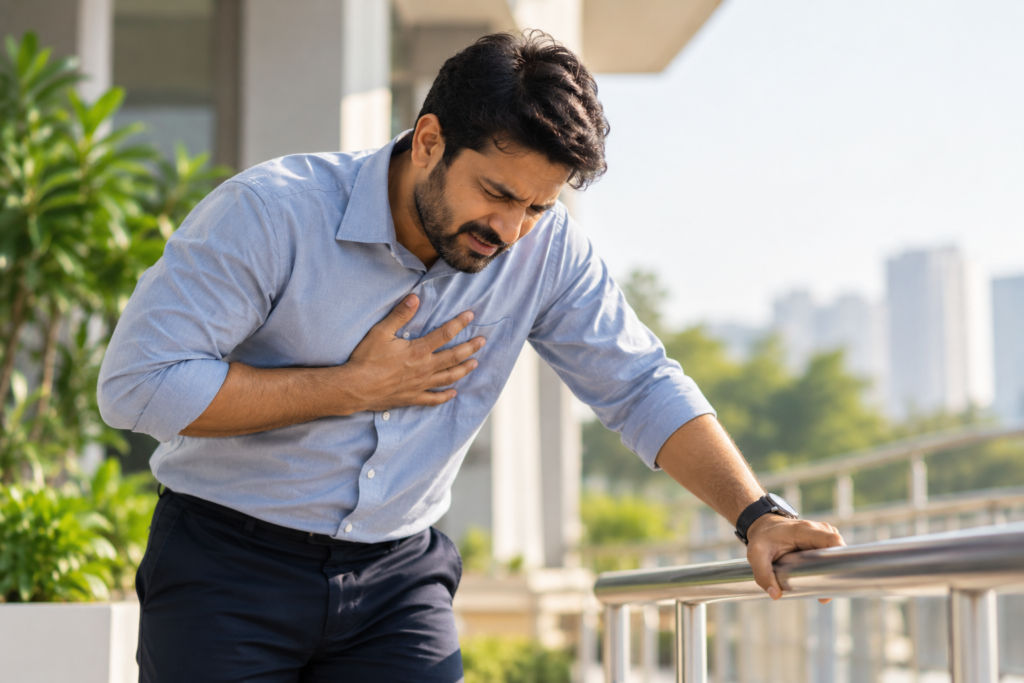
Most heart attacks don’t look like the dramatic scenes you see in films. Sometimes it starts as a vague heaviness in the chest that you brush off as tiredness. At Kaigo Home Health Care, we meet many families who wish they had recognised the signs sooner, which is why we wrote this guide. Acting without delay can protect heart muscle and save a life.
What Happens During a Heart Attack
A heart attack occurs when an artery feeding the heart gets blocked, usually by a clot. Without blood, heart muscle starts to get damaged, and the longer the blockage lasts, the more is lost. That is why time matters more than anything else.
Common Warning Signs
- Chest discomfort: a feeling of pressure, squeezing or heaviness that stays for more than a few minutes
- Spreading pain: discomfort moving to the arm, shoulder, neck, jaw or back
- Shortness of breath: feeling breathless during easy tasks or even at rest
- Cold sweat: sweating for no clear reason, with pale, clammy skin
- Nausea or dizziness: often mistaken for indigestion
Signs That Are Easy to Miss
Not everyone gets crushing chest pain. Women, older adults and people with diabetes may notice subtler signs, such as unusual tiredness, jaw or back pain, or breathlessness without any chest pain. Diabetes can dull pain signals, so serious damage may feel mild. If something feels off, trust that feeling.
Heart Attack or Just Acidity?
Acidity usually feels like burning behind the breastbone after a meal and eases with an antacid. Heart-related discomfort feels more like weight or pressure and does not settle with rest. You cannot reliably tell them apart at home, so treat the symptoms as a heart problem until a doctor says otherwise. A false alarm costs you an evening. A missed heart attack can cost far more.
When to Seek Emergency Care
Seek emergency help right away if you or someone near you experiences:
- Chest pain or tightness that continues for more than five minutes
- Chest discomfort accompanied by cold sweats, difficulty breathing, nausea or a feeling of faintness
- Pain that travels to the arm, jaw, neck or back
- Sudden severe breathlessness or a collapse
Call 112, or the ambulance service 108 in Kerala, without waiting to see if it passes.
While You Wait for Help
- Sit down in a half-upright position and loosen tight clothing.
- Do not drive yourself to the hospital.
- Chew an aspirin only if the emergency dispatcher instructs you, as it is not safe for everyone.
- If the person stops responding and is not breathing normally, start CPR if you know how.
Protecting Your Heart
High blood pressure, high cholesterol, diabetes, smoking and low activity raise your risk. Regular checks catch problems early, and doctor consultation services at home make them easier to keep up, especially for elderly parents who tire on hospital visits. Daily walking, less salt and fried food, and taking medicines on time all help.
Recovery After a Heart Attack
Recovery means taking medicines exactly as prescribed, attending follow-ups and returning to activity gradually. Skilled nursing services at home can support this stage with vital sign monitoring and medication management, so patients heal in a familiar setting.
If something feels wrong in your chest, do not wait or try to be brave. Call for help first. It’s far better to get checked and be told everything is fine than to stay silent and risk being wrong.
Kaigo Home Health Care understands how frightening cardiac events are for families. Our home health care services include nursing support, doctor visits and rehabilitation care, so recovery can continue safely at home after the hospital stay.