
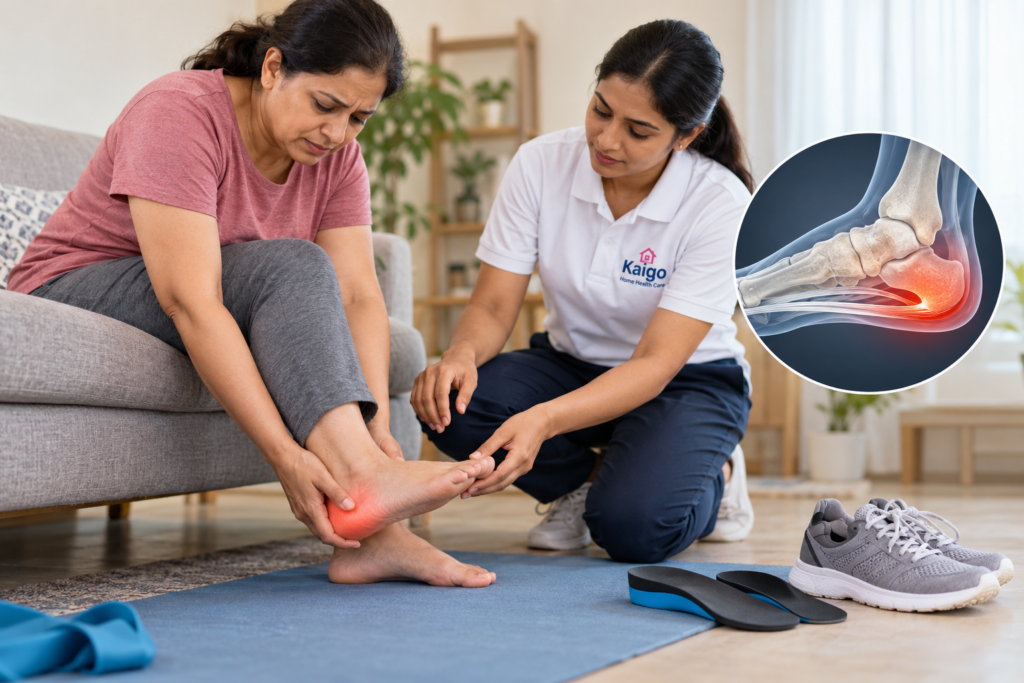
Sharp heel pain with your first steps in the morning can make even a short walk feel like a chore. Many people are told they have a calcaneal spur and assume an operation is the only fix. In most cases, it is not. Kaigo Home Health Care provides physiotherapy services focused on relieving heel discomfort, improving mobility, and supporting recovery through personalized exercises and practical lifestyle adjustments, helping many patients manage their condition without surgery.
What Is a Calcaneal Spur?
A calcaneal spur, also called a heel spur, is a small bony growth that forms on the underside of the heel bone. Repeated pressure on the foot can gradually lead to its formation over an extended period.
Common triggers include:
- Long hours of standing or walking
- Reduced flexibility in the calf muscles or the connective tissue along the sole of the foot.
- Flat feet or very high arches
- Worn-out or unsupportive footwear
- Extra body weight
- Running or jumping on hard surfaces
The Spur Is Not Always the Real Problem
Here is something many people are surprised to hear. The spur itself is often not what hurts. Plenty of people have heel spurs on an X-ray and feel no pain at all. The discomfort often originates from irritation of the surrounding soft tissues, particularly the plantar fascia, which extends across the bottom of the foot.
This is good news. It means that calming the inflammation and easing the strain on the foot can relieve pain even though the spur remains. Treatment aims to ease heel pain and restore comfortable movement without necessarily removing the bone spur.
So, Can Physiotherapy Treat It Without Surgery?
For most people, yes. Non-surgical treatments are usually the first choice for managing heel pain, with improvement often occurring gradually over time. Surgery is generally reserved for cases where symptoms remain persistent despite appropriate treatment.
Physiotherapy focuses on easing heel discomfort, restoring movement, and addressing everyday activities that place excessive pressure on the foot.
How Physiotherapy Helps
1. Stretching the Foot and Calf
Reduced flexibility in the calf muscles and the tissue beneath the foot can place additional pressure on the heel during movement. Regular, gentle stretching reduces that pull and eases morning stiffness.
2. Strengthening the Foot and Leg Muscles
Stronger muscles in the foot, ankle and lower leg absorb shock better, so less stress lands on the heel.
3. Manual Therapy and Soft Tissue Techniques
Manual therapy techniques can help reduce muscle tension, improve foot and ankle flexibility, and ease discomfort during movement.
4. Pain-Relief Methods
Depending on your condition, a physiotherapist may use ice, heat, taping or other therapeutic techniques to settle pain and swelling, so that exercises become easier to do.
5. Footwear and Support Advice
The right shoes make a real difference. Wearing properly cushioned shoes or suitable heel supports, as recommended by your physiotherapist, can help relieve pressure and make walking more comfortable.
6. Correcting Walking and Standing Habits
Your posture, walking pattern, and weight distribution can influence the amount of stress placed on your heel. Small corrections, guided by a trained eye, can prevent the pain from returning.
What a Treatment Plan Usually Looks Like
- A comprehensive assessment of foot health, movement patterns, and daily physical activities.
- A personalised exercise plan that starts gently and builds slowly
- Hands-on treatment to ease tightness and pain
- Advice on footwear, activity levels and rest
- Regular reviews to adjust the plan as you improve
Consistency matters more than intensity. Doing a few simple stretches every day will usually help more than a hard session once a week.
The Convenience of Physiotherapy at Home
Heel pain makes travelling uncomfortable, especially for older adults or people who must stay on their feet for work. Physiotherapy at home removes the need for regular clinic visits and lets your therapist see the shoes, floors and routines that may be adding to the problem. Many patients also find they stick to their exercises better in a familiar setting, which speeds up recovery.
Simple Habits That Support Recovery
- Avoid walking barefoot on hard floors
- Replace worn-out shoes
- Rest your feet after long periods of standing
- Maintain a healthy weight
- Increase walking or running distance gradually
- Do your stretches daily, even when the pain eases
When to See a Doctor
Physiotherapy is helpful, but some symptoms need medical attention. Please see a doctor if you notice:
- Severe pain that stops you from walking
- Swelling, redness or warmth in the heel
- Numbness or tingling in the foot
- No improvement after several weeks of treatment
- Heel pain along with diabetes or poor circulation
A doctor consultation at home can help identify the underlying cause of heel pain, exclude other possible conditions, and determine whether physiotherapy is a suitable treatment option.
A calcaneal spur does not necessarily require surgical treatment. With appropriate physiotherapy, patients can experience reduced heel discomfort, better flexibility, and improved foot strength, making everyday movement easier. Early intervention, regular exercises, and professional guidance play an important role in managing the condition effectively.
Kaigo Home Health Care provides personalized physiotherapy at home and doctor consultation at home to address heel pain and support individual recovery needs. Our healthcare professionals focus on helping patients regain mobility and manage discomfort through convenient, professional care in their own homes.