
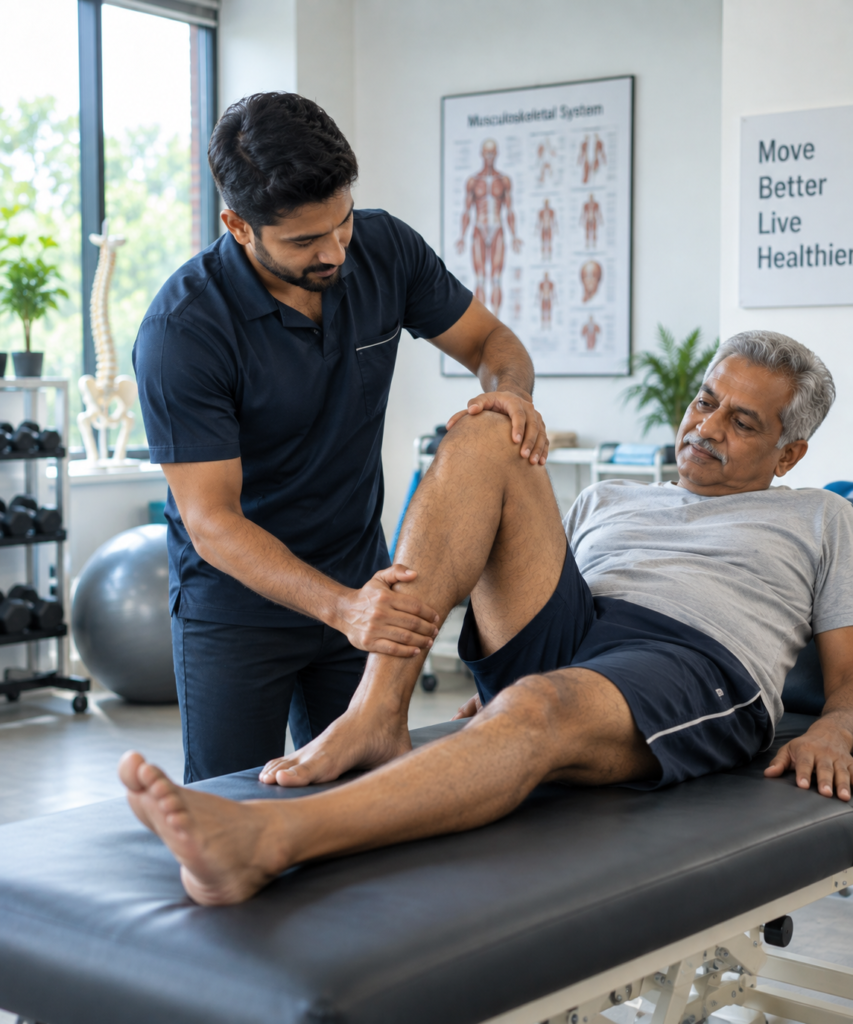
Knee pain can slow down even the simplest parts of your day, climbing stairs, sitting down, or just standing for too long. For many people, surgery feels like the obvious first step. In reality, it’s often not the only one. Physiotherapy has helped thousands of people manage knee pain, rebuild strength, and avoid surgery altogether. At Kaigo Home Health Care, we’ve seen this firsthand through our physiotherapy services at home in Trivandrum and Kollam, where patients recover comfortably in their own space, at their own pace.
Why Does Knee Pain Happen?
Knee pain doesn’t always start with a single injury. Often, it builds up slowly. Common causes include:
- Osteoarthritis, or wear and tear in the joint over time
- Weak muscles around the knee, especially the quadriceps
- Old injuries that never fully healed
- Poor posture or walking patterns
- Being on your feet for long hours without enough rest
Whatever the cause, the pain usually comes from the same place: the joint isn’t getting the support it needs from the muscles and tissues around it. That’s exactly where physiotherapy comes in.
How Physiotherapy Actually Reduces Knee Pain
Physiotherapy doesn’t just mask the pain; it works on the reason the pain exists in the first place. Here’s how.
1. It Strengthens the Muscles Around the Knee
Your knee joint depends on the surrounding muscles, especially the thigh muscles, for support. When those muscles are weak, the knee takes on more stress than it should. A physiotherapist designs targeted exercises to rebuild that strength gradually, so the joint has proper support again.
2. It Improves Flexibility and Range of Motion
Stiff joints often hurt more. Gentle stretching and mobility exercises, done consistently, help the knee move more freely and reduce the tightness that makes everyday movement painful.
3. It Corrects Movement Patterns
Sometimes pain comes from how you walk or move, not just the joint itself. A physiotherapist can spot these patterns and guide you toward movements that put less strain on the knee.
4. It Reduces Inflammation
Techniques like manual therapy, ice or heat application, and guided movement help calm inflammation in and around the joint, which is often a major source of pain.
5. It Builds Long-Term Joint Stability
The goal isn’t just short-term relief. Physiotherapy focuses on building lasting strength and balance, so the knee is less likely to flare up again down the line.
What a Physiotherapy Session for Knee Pain Looks Like
Every plan is different because every knee is different. A typical approach usually includes:
- An initial assessment to understand the cause and severity of the pain
- A personalized exercise plan, starting gently and building up gradually
- Manual therapy techniques to ease stiffness and improve movement
- Guidance on posture, walking, and daily movement habits
- Regular progress checks to adjust the plan as the knee improves
Consistency matters more than intensity here. Slow, steady progress tends to produce better, longer-lasting results than pushing too hard too soon.
When Physiotherapy Works Best
Physiotherapy tends to work particularly well for:
- Early to moderate osteoarthritis
- Post-injury recovery once the acute phase has passed
- Muscle weakness contributing to joint pain
- Preventing pain from worsening before it reaches a surgical stage
That said, not every case can avoid surgery. Some conditions, especially advanced joint damage, may still need a surgical opinion. That’s why it’s worth getting a proper evaluation early, through a doctor consultation at home, rather than waiting until the pain becomes severe. Catching the issue earlier almost always means more non-surgical options are available.
Why At-Home Physiotherapy Makes a Difference
For many people dealing with knee pain, especially older adults, travelling to a clinic regularly can be its own challenge. Sitting in a car, climbing stairs at a clinic, or waiting around can make the pain worse before treatment even begins.
At-home physiotherapy removes that barrier entirely. Sessions happen in a familiar, comfortable environment, which also tends to make patients more consistent with their exercises between sessions, something that matters a lot for long-term results. For patients who also need ongoing monitoring alongside their recovery, skilled nursing services can be arranged alongside physiotherapy, so pain management and general health checks happen together rather than through separate appointments.
A Few Simple Habits That Support Recovery
Alongside physiotherapy, a few daily habits can make a real difference:
- Avoid sitting or standing in one position for too long
- Use supportive footwear, especially if you’re on your feet often
- Maintain a healthy weight to reduce pressure on the joint
- Stay consistent with prescribed exercises, even on days when the knee feels better
- Don’t skip follow-up sessions; progress tends to plateau without them
Surgery isn’t always the first or only answer to knee pain. For a large number of people, physiotherapy offers a real, sustainable path to relief, one built on strengthening the joint rather than simply managing symptoms. If knee pain has been affecting your daily life, it’s worth exploring physiotherapy before considering surgical options.
Kaigo Home Health Care provides physiotherapy services at home in Trivandrum and Kollam, along with doctor consultations at home for those who want a proper diagnosis before starting treatment. Our team works with each patient individually, building a recovery plan around their specific needs, so healing happens where it’s most comfortable: at home.