

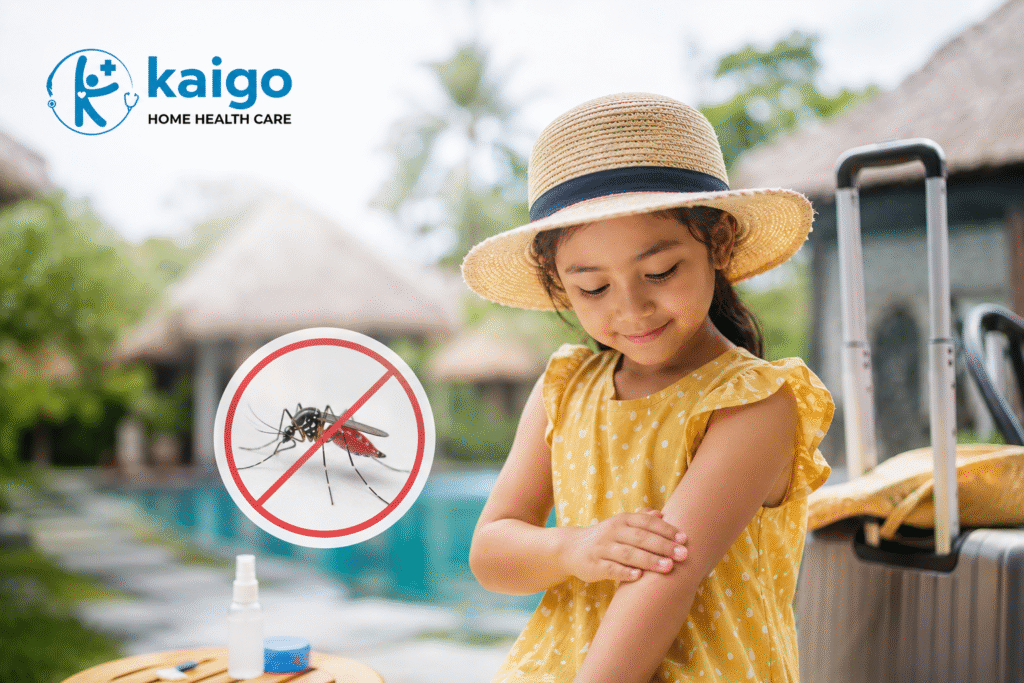
Family vacations are meant to create joyful memories, but changing climates, outdoor activities, and travel destinations can sometimes increase the risk of mosquito-borne illnesses in children. At Kaigo Home Health Care, we believe prevention and awareness are essential when it comes to protecting children from diseases like dengue and malaria during travel. Parents who take simple precautions can significantly reduce health risks and ensure a safer, stress-free vacation experience for the entire family.
Why Children Are More Vulnerable During Travel
Children often spend more time outdoors while travelling, playing near beaches, gardens, pools, parks, or nature destinations where mosquitoes are commonly found. Their immune systems may also be more sensitive to infections than those of adults.
Warm and humid climates, stagnant water, and crowded tourist locations can increase mosquito activity, especially during monsoon and tropical travel seasons.
This makes mosquito safety an important part of vacation planning.
Understanding Dengue and Malaria
Dengue Fever
Dengue is caused by a virus spread through Aedes mosquitoes, which usually bite during daytime hours.
Common symptoms include:
- High fever
- Severe body pain
- Headache
- Vomiting
- Skin rashes
- Fatigue
In some cases, dengue can become severe and may require immediate medical attention.
Malaria
Malaria is caused by parasites transmitted through infected Anopheles mosquitoes, which commonly bite during evening and nighttime hours.
Symptoms may include:
- Fever with chills
- Sweating
- Weakness
- Nausea
- Muscle pain
- Headaches
Early detection and treatment are extremely important, especially for children.
Mosquito Prevention Tips for Kids During Vacation
1. Dress Children in Protective Clothing
Light-colored, full-sleeved clothing can help reduce mosquito bites significantly.
Whenever possible:
- Use full pants instead of shorts.
- Cover arms and legs during evenings.
- Choose breathable cotton fabrics.
Mosquitoes are often attracted to exposed skin, especially during outdoor play.
2. Use Child-Safe Mosquito Repellents
Always carry a paediatrician-approved mosquito repellent while traveling.
Choose repellents specifically designed for children and apply them:
- Before outdoor activities
- During evening outings
- Around gardens, lakes, or parks
Avoid applying repellents directly near the eyes or mouth.
3. Avoid Mosquito-Prone Areas During Peak Hours
Mosquito activity is usually higher:
- Early morning
- Evening
- Nighttime
Try to limit outdoor exposure during these hours, especially in areas with stagnant water or dense vegetation.
4. Keep Hotel Rooms Mosquito-Free
Before settling into hotel rooms or vacation stays:
- Close windows when possible
- Use mosquito nets if necessary.
- Turn on the air conditioning or fans.
- Check for standing water nearby.
A mosquito-free sleeping environment is extremely important for children.
5. Keep Kids Hydrated and Well Rested
Strong immunity can help the body recover better from infections.
During travel:
- Encourage regular hydration
- Ensure proper sleep
- Avoid excessive sun exposure.
- Maintain balanced nutrition
Healthy routines become even more important during vacations.
6. Watch for Early Symptoms After Travel
Parents should remain alert even after returning from vacation.
Seek medical attention if your child develops:
- Fever
- Unusual tiredness
- Rashes
- Vomiting
- Chills
- Persistent headaches
Early diagnosis can prevent complications and support faster recovery.
Why Prevention Matters More Than Treatment
Dengue and malaria cases often increase during seasonal climate changes and travel periods. While treatments are available, prevention remains the safest and most effective approach for children.
Simple travel precautions can greatly reduce exposure to mosquito bites and help families enjoy safer vacations.
Parents should always keep basic medical supplies, mosquito protection essentials, and emergency healthcare contacts available while traveling with children.
Traveling with children requires extra attention to health and safety, especially in regions where mosquito-borne illnesses are common. Awareness, preventive care, and early action can make a major difference in protecting kids from dengue and malaria during vacations.
At Kaigo Home Health Care, we are committed to helping families prioritize health, prevention, and timely care through trusted healthcare support and home health services. Safe travel begins with informed care and proactive protection for your loved ones.