

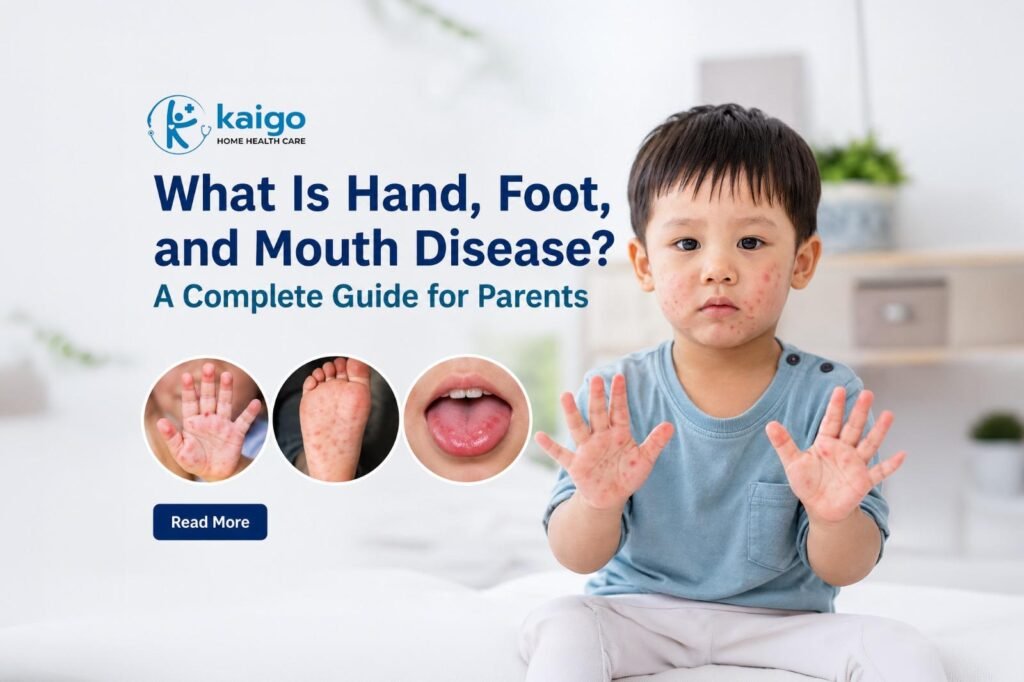
As a parent, seeing your child develop a fever, painful mouth sores, or an unexplained rash can be worrying. One common childhood illness that often causes these symptoms is Hand, Foot, and Mouth Disease (HFMD). Although it is usually mild, early recognition and proper care are essential for a quick recovery. At Kaigo, we understand how important timely medical support is for families. Whether you need professional guidance or in-home care, having trusted healthcare support can make caring for your child much easier.
What Is Hand, Foot, and Mouth Disease?
Hand, Foot, and Mouth Disease (HFMD) is a highly contagious viral infection that mainly affects infants and children under the age of five. However, older children and even adults can occasionally become infected. The Coxsackievirus A16 most commonly causes the illness, although other enteroviruses can also be responsible.
Hand, Foot, and Mouth Disease (HFMD) should not be confused with foot-and-mouth disease, a viral illness that affects cattle and other livestock. It is a completely different viral infection that only affects humans.
What Causes Hand, Foot, and Mouth Disease?
HFMD spreads easily from person to person through:
- Saliva and respiratory droplets
- Nasal mucus
- Fluid from blisters
- Stool of an infected person
- Contaminated toys, utensils, and surfaces
Children are especially vulnerable because they often have close contact with one another in schools, daycare centres, and playgrounds.
Common Symptoms of HFMD
Symptoms generally appear three to six days after exposure to the virus. Early signs include:
- Mild to moderate fever
- Sore throat
- Loss of appetite
- Tiredness or irritability
- Painful mouth ulcers
- Red rash on the hands, feet, palms, soles, buttocks, and sometimes legs
The rash usually does not itch but may develop into small blisters. Painful mouth sores can make it difficult for children to eat and drink, increasing their risk of dehydration.
How Is HFMD Diagnosed?
Doctors can usually diagnose Hand, Foot, and Mouth Disease by examining the symptoms and characteristic rash. Laboratory testing is rarely required unless symptoms are unusual or severe.
If your child develops a persistent high fever, severe dehydration, difficulty breathing, or unusual drowsiness, immediate medical attention is recommended. Many parents also choose Best doctor consultation services at home when their child is unwell, allowing experienced medical professionals to evaluate symptoms without exposing the child to crowded clinics.
Treatment for Hand, Foot, and Mouth Disease
There is currently no specific antiviral treatment for HFMD. The illness generally resolves on its own within 7 to 10 days.
Treatment focuses on relieving symptoms.
Keep Your Child Hydrated
Offer plenty of fluids such as:
- Water
- Coconut water
- Oral rehydration solutions
- Cold milk
- Chilled soups
Avoid acidic drinks, as they can irritate mouth sores and make the pain worse.
Reduce Fever and Pain
Doctors may recommend age-appropriate medications such as paracetamol or ibuprofen to manage fever and discomfort.
Encourage Soft Foods
Choose foods that are easy to swallow, including:
- Yogurt
- Mashed potatoes
- Rice porridge
- Smoothies
- Ice cream (in moderation)
Avoid spicy, salty, or citrus foods while mouth ulcers are healing.
Preventing the Spread of HFMD
Although vaccines for HFMD are limited in some countries, good hygiene remains the most effective preventive measure.
Parents should:
- Wash hands frequently with soap and water.
- Clean toys and frequently touched surfaces regularly.
- Teach children proper hand hygiene.
- Avoid sharing cups, towels, or utensils.
- Keep infected children at home until fever subsides and blisters begin to heal.
These simple habits significantly reduce the risk of transmission.
Caring for Your Child at Home
Most children recover comfortably with supportive care at home. During recovery, parents should monitor:
- Fluid intake
- Urine output
- Body temperature
- Ability to eat and drink
- Changes in rash or blisters
A trained Health care assistant can also help families by monitoring symptoms, assisting with hydration, maintaining hygiene, and supporting children who need extra attention during recovery, especially when parents have demanding schedules.
When Should You See a Doctor?
Seek medical care immediately if your child experiences:
- Fever lasting more than three days
- Refusal to drink fluids
- Signs of dehydration
- Difficulty breathing
- Persistent vomiting
- Confusion or unusual sleepiness
- Seizures
Prompt evaluation helps prevent complications, even though serious cases remain uncommon.
Can Adults Get Hand, Foot, and Mouth Disease?
Yes. Although less common, adults can also contract Hand, Foot, and Mouth Disease, especially if they have close contact with an infected child. Adults often experience milder symptoms but can still spread the virus to others.
Practising good hygiene remains essential for every family member.
Recovery and Aftercare
Most children recover completely without long-term complications. Even after symptoms improve, the virus may remain in the stool for several weeks, making continued handwashing extremely important.
For children recovering from illness, some families may benefit from Best skilled nursing services at home when ongoing observation, medication support, or specialised paediatric care is needed under professional supervision.
Frequently Asked Questions
Is Hand, Foot, and Mouth Disease dangerous?
In most cases, HFMD is mild and resolves within one week. Serious complications are rare but require immediate medical attention if they occur.
How long is HFMD contagious?
Children are most contagious during the first week of illness, although they may continue shedding the virus in their stool for several weeks.
Can my child go to school?
Children should stay home until they are fever-free and feel well enough to participate in normal activities. Following your healthcare provider’s advice helps reduce transmission.
Can HFMD happen more than once?
Yes. Since different viruses can cause HFMD, previous infection does not provide complete immunity.
Hand, Foot, and Mouth Disease can be stressful for both children and parents, but with early recognition, proper hydration, symptom management, and good hygiene, most children recover quickly without complications. Being well-informed helps you recognise symptoms early and seek timely medical care when needed. At Kaigo, we are committed to helping families access compassionate home healthcare services, making it easier to care for your loved ones safely and comfortably whenever professional assistance is needed.